
Back to All Case Studies
Web3
MVP
0→1
iOS
Aviation


Bringing Order to Private Jet Operations
Design a single, mobile-first operational system that replaces fragmented tools, giving private jet crews a clear, reliable source of truth for time-critical and compliance-sensitive information.
Timeline
November 2025 – Feb 2026
Scope
iOS • UX/UI design • IA • Product Definition • System Design
Role
Senior Product Designer
& Project Manager
Team
Founder • 1 iOS Engineer
Trouble
Private jet crews relied on disconnected tools for trips, rosters, documents, and communication, creating inefficiency, compliance risk, and time lost searching for critical information during operations.
Leverage
Applied systems thinking and mobile-first product design to restructure aviation workflows into a single, coherent operational model designed for clarity, speed, and reliability under pressure.
Difference
Designed a calm, focused iOS MVP that replaces fragmentation with a trusted source of truth, prioritising what crews need in the moment, not everything at once.

Mission
Private jet operations depend on precision, speed, and compliance and crews are responsible for managing large amounts of critical information across every flight.
But the tools they relied on were fragmented spread across emails, folders, spreadsheets, and generic apps that weren’t designed for aviation workflows.
Therefore, the mission was to design a focused iOS product that brought operational clarity into one place, reducing friction, uncertainty, and risk.

Obstacles
The problem space was operationally complex, with real consequences if things went wrong.
The team was small, just a founder, one engineer, and me, with limited time to validate ideas or overbuild solutions.
Every decision had to balance speed with responsibility: shipping something genuinely useful without increasing cognitive load or operational overhead.

Vision & Insight
Observation
Crews spent a significant amount of time searching for information rather than acting on it. Critical documents were hard to locate, versions were unclear, and ownership was inconsistent.
Pattern
When information wasn’t easy to find or trust, crews relied on memory, duplication, or “just in case” workarounds. The more fragmented the tools, the more fragile the operation became.
Interpretation
The issue wasn’t missing features — it was missing structure. Aviation workflows are time-critical, yet existing tools treated information as static files instead of operational inputs.
💡 Key Insight
In high-pressure operations, clarity isn’t a convenience — it’s a safety feature.
Recommendation
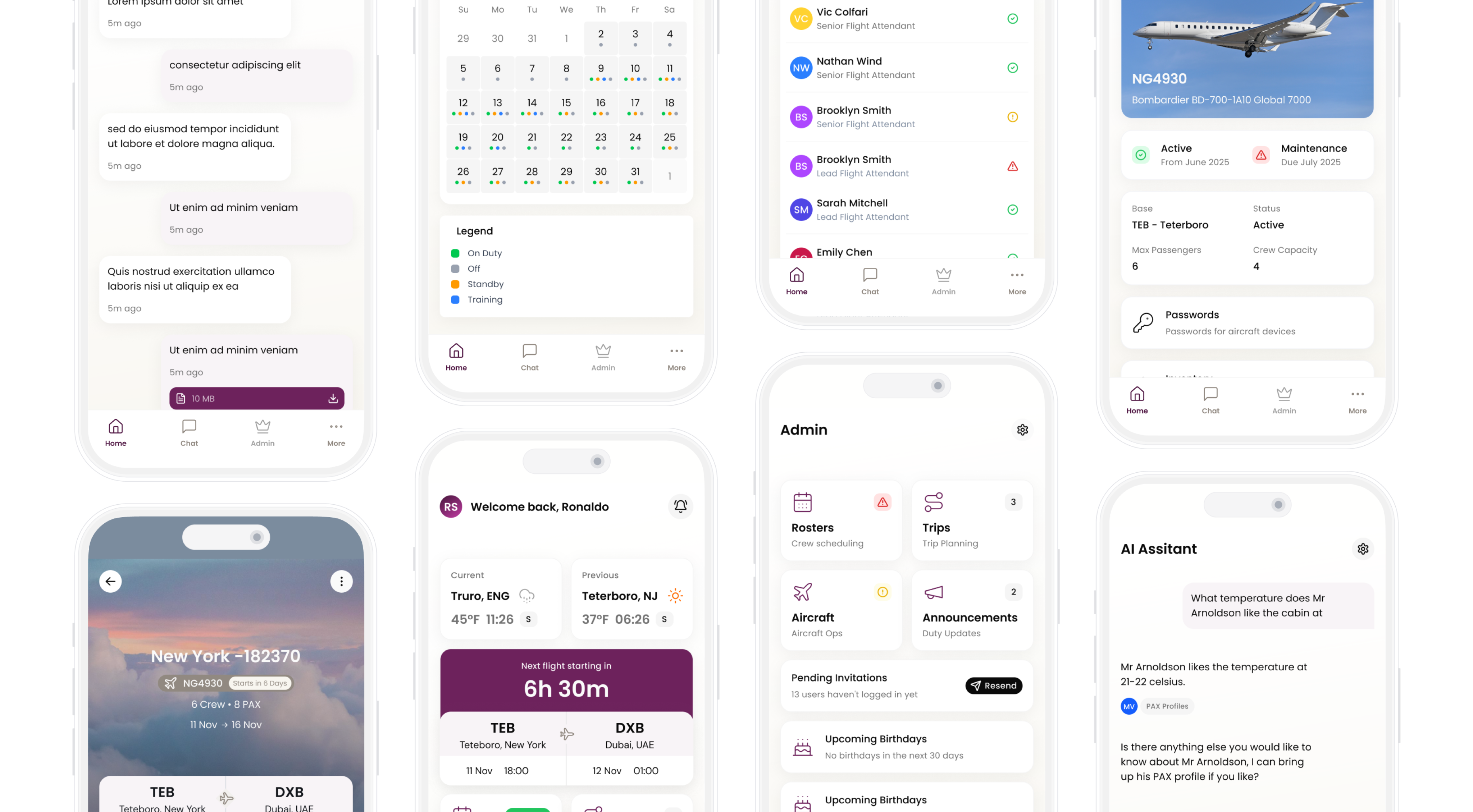
Design Pronteer as a single operational surface, not a feature set:

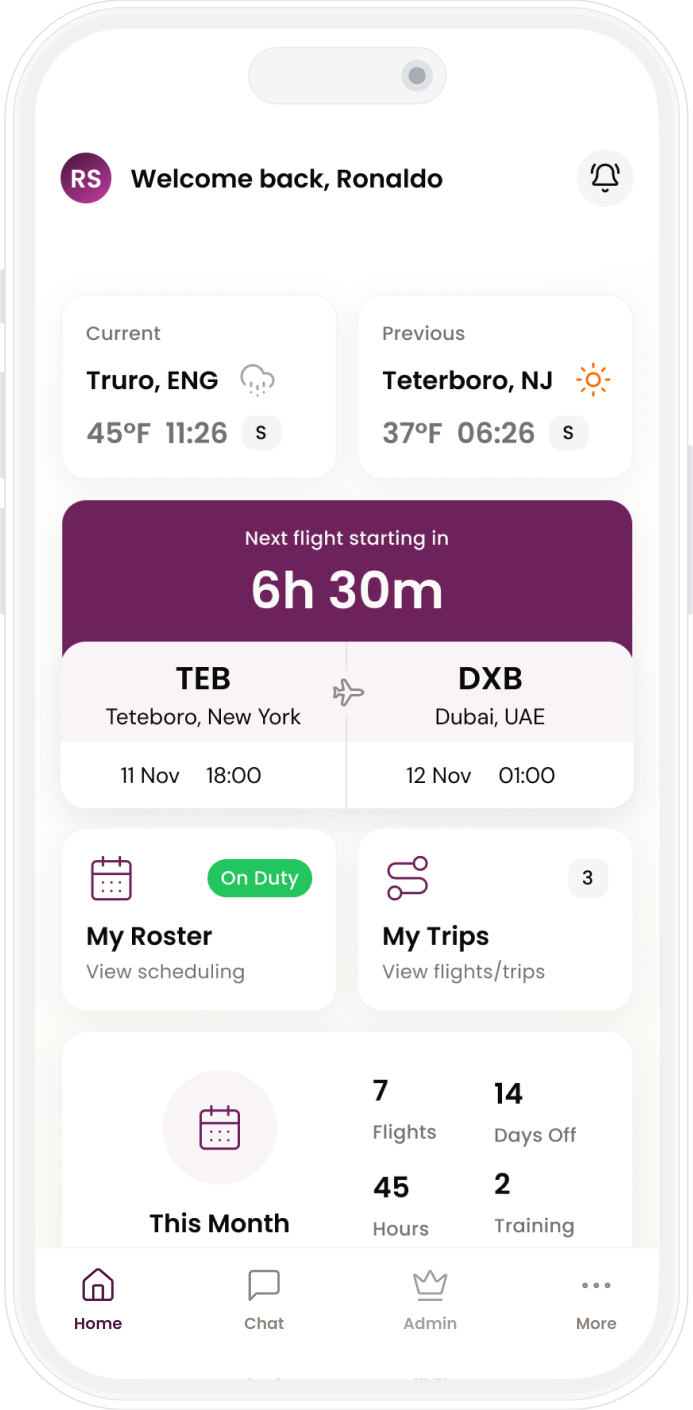
Surface only what matters in the current operational moment
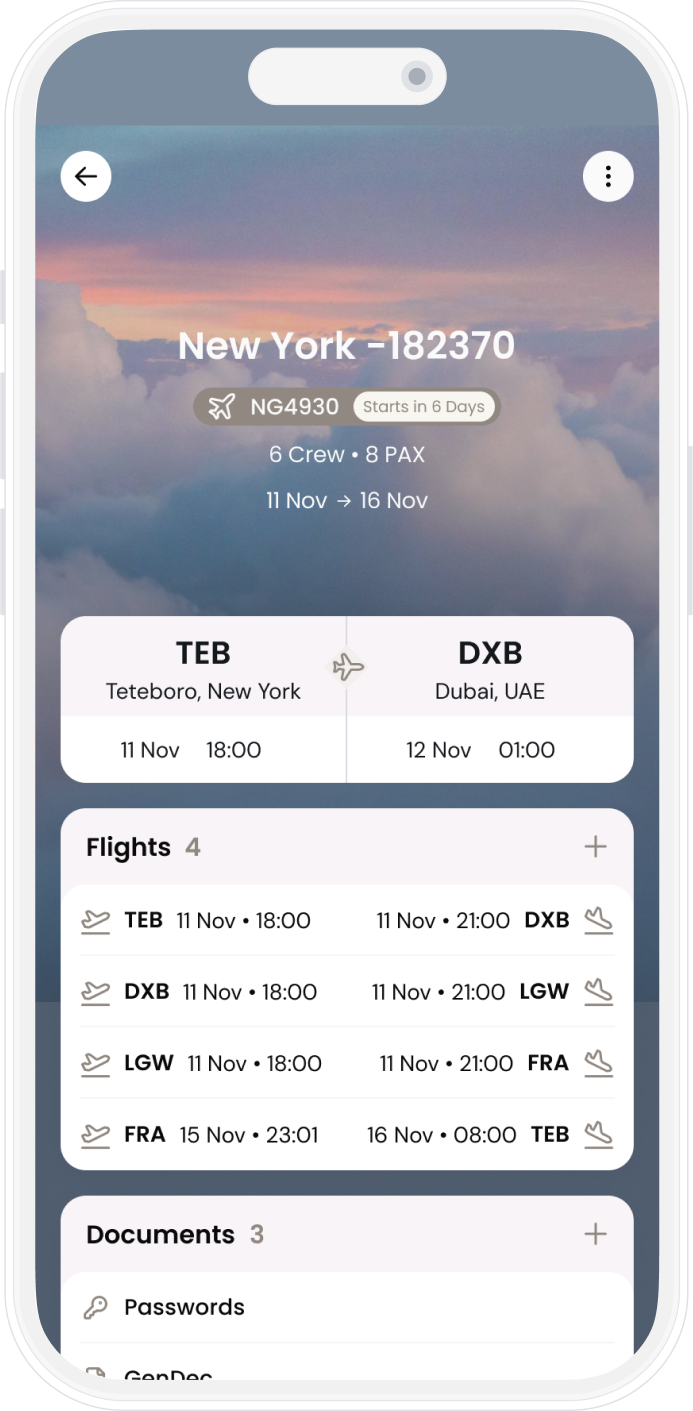
Group information by task and context, not file type
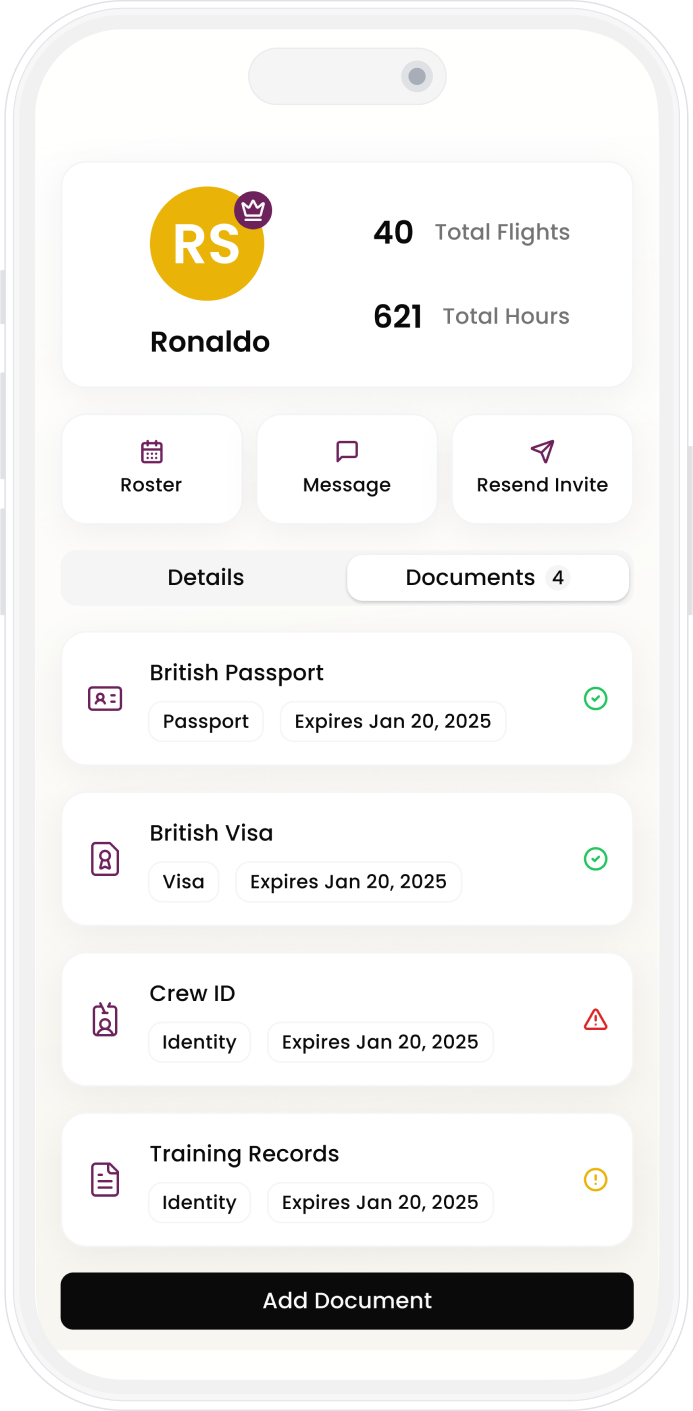
Make status and completeness visible at a glance
Design mobile-first for crews working on the move
This reframed Pronteer from “another tool” into a trusted operational system.
Implementation
We aligned product, engineering, and design on shared success metrics, and prioritized iterative delivery through agile sprints.
The redesign was sequenced in layers to avoid disruption:
MVP
Defined the MVP and prioritised core operational use cases
Information Architecture
Designed the information architecture and navigation model
Wireframes and Prototype
Created wireframes, prototypes and high-fidelity iOS UI
Visual Hierarchy
Established a clear visual hierarchy for critical vs secondary information
Impact & Results (Pre-Launch)
Outcomes across design, users, and business
Design Impact
Created a coherent operational model for private jet crews
Replaced fragmented tools with a clear, structured system
Designed for calm, clarity, and confidence under pressure
User Impact
Reduced cognitive load when accessing critical flight information
Made operational status easier to understand at a glance
Supported more consistent, predictable workflows across crews
Business Impact
Established a strong foundation for a scalable aviation operations product
Positioned Pronteer as a focused alternative to generic tools
Reduced risk by design through clearer ownership and structure
Reflection
Scope discipline matters more than feature coverage
Although we reduced the MVP scope, in hindsight I would have narrowed it further to focus primarily on rosters and trips; the true operational backbone of the product. A tighter core would have validated value faster and reduced cognitive load earlier.
Clear product ownership protects design quality
Without a dedicated Product Manager, I absorbed significant PM responsibility. While this helped decisions move quickly, it also pulled focus away from deep design work. Having clearer ownership earlier would have improved both design depth and delivery pace.
Operations-first products demand ruthless prioritisation
Designing for high-risk, time-critical workflows reinforced that every additional feature adds complexity. In operational contexts, less functionality, when well structured, often delivers more value.
Designing under constraint sharpens judgment
Working with a small team and limited runway strengthened my ability to make trade-offs quickly, align stakeholders, and keep the product grounded in real-world use rather than theoretical completeness.
Future Opportunities

Introduce offline access and sync confidence indicators
Add the feature set for phase 2 but incrementally starting with flights reports and checklists
Introduce AI-driven chat to enable crew to quickly surface important information such as PAX preferences and flight details
A need for an iPad version was identified during user testing
Ready to explore more work?
Discover other case studies or get in touch to discuss your project.
Back to All Case Studies
Web3
MVP
0→1
iOS
Aviation
Bringing Order to Private Jet Operations
Design a single, mobile-first operational system that replaces fragmented tools, giving private jet crews a clear, reliable source of truth for time-critical and compliance-sensitive information.
Timeline
4 months
Scope
iOS • UX/UI design • IA • Product Definition • System Design
Role
Senior Product Designer
& Project Manager
Team
Founder • 1 iOS Engineer
Trouble
Private jet crews relied on disconnected tools for trips, rosters, documents, and communication, creating inefficiency, compliance risk, and time lost searching for critical information during operations.
Leverage
Applied systems thinking and mobile-first product design to restructure aviation workflows into a single, coherent operational model designed for clarity, speed, and reliability under pressure.
Difference
Designed a calm, focused iOS MVP that replaces fragmentation with a trusted source of truth, prioritising what crews need in the moment, not everything at once.
Mission
Private jet operations depend on precision, speed, and compliance and crews are responsible for managing large amounts of critical information across every flight.
But the tools they relied on were fragmented spread across emails, folders, spreadsheets, and generic apps that weren’t designed for aviation workflows.
Therefore, the mission was to design a focused iOS product that brought operational clarity into one place, reducing friction, uncertainty, and risk.
Obstacles
The problem space was operationally complex, with real consequences if things went wrong.
The team was small, just a founder, one engineer, and me, with limited time to validate ideas or overbuild solutions.
Every decision had to balance speed with responsibility: shipping something genuinely useful without increasing cognitive load or operational overhead.
Vision & Insight
Observation
Crews spent a significant amount of time searching for information rather than acting on it. Critical documents were hard to locate, versions were unclear, and ownership was inconsistent.
Pattern
When information wasn’t easy to find or trust, crews relied on memory, duplication, or “just in case” workarounds. The more fragmented the tools, the more fragile the operation became.
Interpretation
The issue wasn’t missing features — it was missing structure. Aviation workflows are time-critical, yet existing tools treated information as static files instead of operational inputs.
💡 Key Insight
In high-pressure operations, clarity isn’t a convenience — it’s a safety feature.
Recommendation
Design Pronteer as a single operational surface, not a feature set:
Surface only what matters in the current operational moment
Group information by task and context, not file type
Make status and completeness visible at a glance
Design mobile-first for crews working on the move
This reframed Pronteer from “another tool” into a trusted operational system.
Implementation
We aligned product, engineering, and design on shared success metrics, and prioritized iterative delivery through agile sprints.
The redesign was sequenced in layers to avoid disruption:
MVP
Defined the MVP and prioritised core operational use cases
Information Architecture
Designed the information architecture and navigation model
Wireframes and Prototype
Created wireframes, prototypes and high-fidelity iOS UI
Visual Hierarchy
Established a clear visual hierarchy for critical vs secondary information
Impact & Results (Pre-Launch)
Outcomes across design, users, and business
Design Impact
Created a coherent operational model for private jet crews
Replaced fragmented tools with a clear, structured system
Designed for calm, clarity, and confidence under pressure
User Impact
Reduced cognitive load when accessing critical flight information
Made operational status easier to understand at a glance
Supported more consistent, predictable workflows across crews
Business Impact
Established a strong foundation for a scalable aviation operations product
Positioned Pronteer as a focused alternative to generic tools
Reduced risk by design through clearer ownership and structure
Reflection
Scope discipline matters more than feature coverage
Although we reduced the MVP scope, in hindsight I would have narrowed it further to focus primarily on rosters and trips; the true operational backbone of the product. A tighter core would have validated value faster and reduced cognitive load earlier.
Clear product ownership protects design quality
Without a dedicated Product Manager, I absorbed significant PM responsibility. While this helped decisions move quickly, it also pulled focus away from deep design work. Having clearer ownership earlier would have improved both design depth and delivery pace.
Operations-first products demand ruthless prioritisation
Designing for high-risk, time-critical workflows reinforced that every additional feature adds complexity. In operational contexts, less functionality, when well structured, often delivers more value.
Designing under constraint sharpens judgment
Working with a small team and limited runway strengthened my ability to make trade-offs quickly, align stakeholders, and keep the product grounded in real-world use rather than theoretical completeness.
Future Opportunities
Introduce offline access and sync confidence indicators
Add the feature set for phase 2 but incrementally starting with flights reports and checklists
Introduce AI-driven chat to enable crew to quickly surface important information such as PAX preferences and flight details
A need for an iPad version was identified during user testing
Ready to explore more work?
Discover other case studies or get in touch to discuss your project.